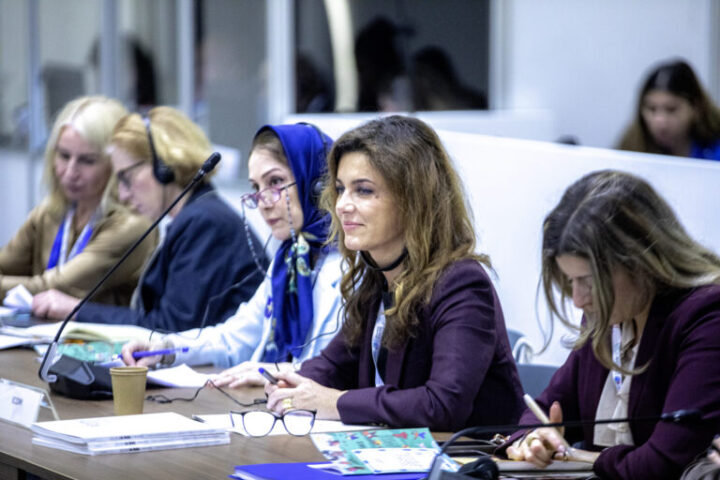
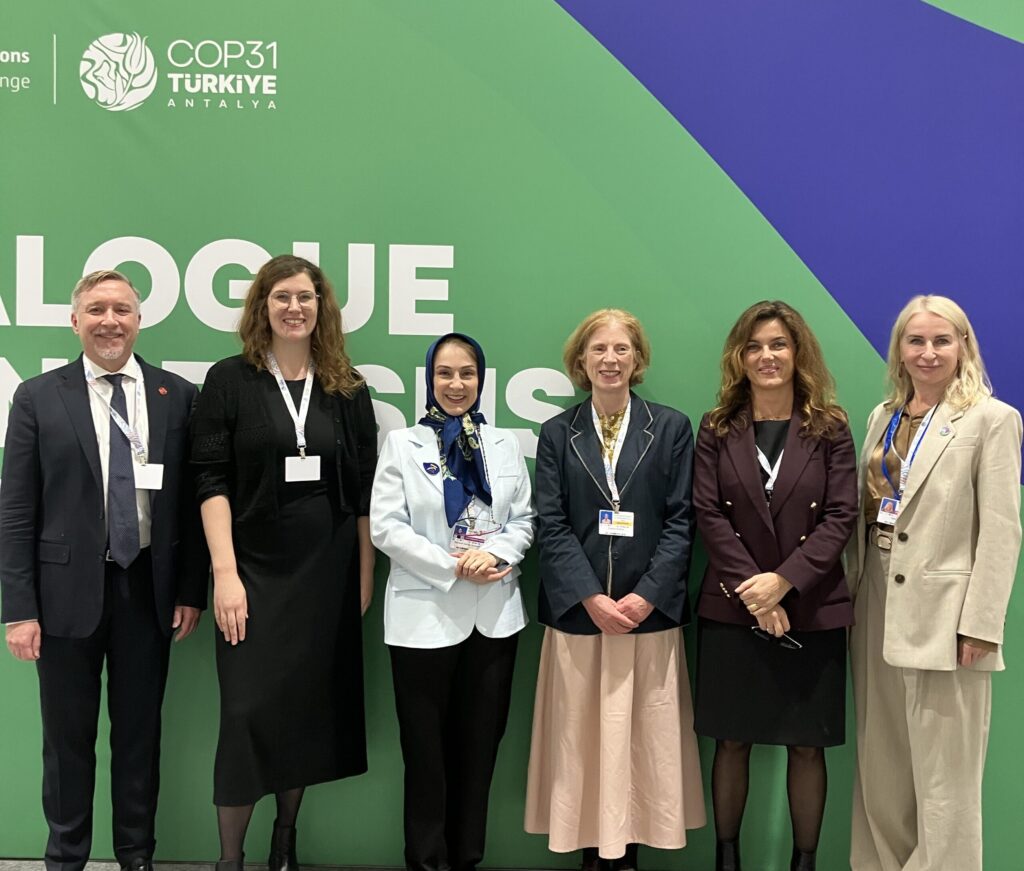
From 17-19 November, ICOM joined other cultural leaders and partners at COP31 in Antalya, Türkiye. This marks ICOM’s fourth consecutive presence in culture-related events at the UNFCCC Conference of the Parties, pursuing its advocacy for the integration of cultural perspectives and heritage into global climate policies and initiatives.
Fourth High-Level Ministerial Dialogue of the Group of Friends of Culture-Based Climate Action
At the Fourth High-Level Ministerial Dialogue of the Group of Friends of Culture-Based Climate Action (GFCBCA), ICOM Vice-President Tayeebeh Golnaz Golsabahi delivered an intervention on behalf of ICOM in its capacity as a Knowledge Partner. The GFCBCA is an informal coalition of States Parties to the United Nations Framework Convention on Climate Change (UNFCCC), bringing together Ministers of Culture and other governmental portfolios, UN entities and civil society organisations to advance culture-based climate action.
During the dialogue, ICOM highlighted the critical role of museums in strengthening community resilience to climate change and called Ministers of Culture for greater support to develop museums’s adaptation and preparedness capacities, particularly as cultural institutions. Beyond safeguarding heritage museums increasingly provide safe and accessible spaces for communities during periods of extreme and prolonged heat.
ICOM also strongly advocated for policy and governance reforms that systematically integrate culture and heritage into national climate preparedness and adaptation frameworks, including in response to the intensifying impacts of El Niño.
Why is ICOM’s presence at the UNFCCC’s Conference of Parties important?
For many years, cultural organisations and practitioners worldwide have championed a simple but powerful message: there can be no effective climate action without culture. As a source of knowledge and a driver of resilience and culture is essential toto addressing the climate crisis and supporting sustainable adaptation pathways.
Significant progress has been made in recent years to strengthen the recognition of culture within international climate policy. A landmark achievement was the adoption of the UAE Framework for Global Climate Resilience, the first framework established under the Paris Agreement’s Global Goal on Adaptation (Article 7) to explicitly recognise cultural heritage as a target area for climate adaptation. Further information on Target 9(g) on Cultural Heritage is available here.
However, culture and heritage remain insufficiently represented in national climate policies and not yet consistently reflected in national climate reporting and planning processes. According to UNESCO, only 20 of the 65 National Adaptation Plans submitted in 2025 referred to cultural heritage.
The GFCBCA seeks to address this gap by promoting international cooperation and the integration of cultureinto climate policies, strategies, and implementation frameworks.
Through its participation at COP31, ICOM’ ensures that the perspectives and expertise of museums are represented within these discussions. By advocating for the inclusion of culture and heritage in climate decision-making, ICOM helps ensure that museums are recognised not only as custodians of heritage, but also as vital actors in advancing climate resilience, adaptation, and sustainable development.
Highlights from Culture at COP31
As culture continues to gain recognition within global climate discussions, several initiatives showcased at COP31 highlighted the sector’s growing contribution to climate action and resilience.
- Culture Global Stocktake (CGST)
The CGST is a global initiative that connects cultural knowledge, practices, and community priorities with climate policy and institutional action. By making international climate processes more accessible to cultural practitioners, while ensuring climate frameworks are responsive to diverse cultural realities and lived experiences, the CGST helps bridge the gap between policy and practice.
Drawing on the frameworks of the UNFCCC, the Paris Agreement, and key international instruments on culture, human rights, and sustainable development, the initiative provides actionable recommendations that align with existing policy and implementation pathways.
Learn more: Culture Global Stocktake
- Heritage Adapts!
Heritage Adapts! is a global campaign mobilises local stewards committed to protecting heritage sites and cultural practices from the impacts of climate change by 2030.
At COP31, organisers announced that more than one hundred pledges had already been made a, reflecting growing international momentum for heritage-based climate action.
Discover the initiative and COP31 sessions: Heritage Adapts!
- İmece
Hosted by AKMED, a research centre dedicated to the civilisations of the Mediterranean, İmece brought together international, national, and local voices working at the intersection of culture and climate action. The gathering celebrated the contributions of artists, cultural practitioners, and heritage professionals while fostering dialogue across disciplines and communities.
Inspired by the Turkish tradition of collective action from which it takes its name, İmece sought to build a lasting legacy beyond COP31 and contribute to the objectives of the International Decade of Culture for Sustainable Development.
Read more about İmece: Culture at COP31
© Filipe Araújo / MinC