
Camille Belvèze ; Manon Lecaplain
Curator responsible for the fine arts, decorative arts and ethnography collections at the Museums of Poitiers, France ; Curator and director of the Museums of Poitiers, France
Museums have no borders,
they have a network
March 6, 2026
Camille Belvèze ; Manon Lecaplain
Curator responsible for the fine arts, decorative arts and ethnography collections at the Museums of Poitiers, France ; Curator and director of the Museums of Poitiers, France
Keywords: women artists, feminism, matrimoine, acquisition, donation, collecting, gender studies
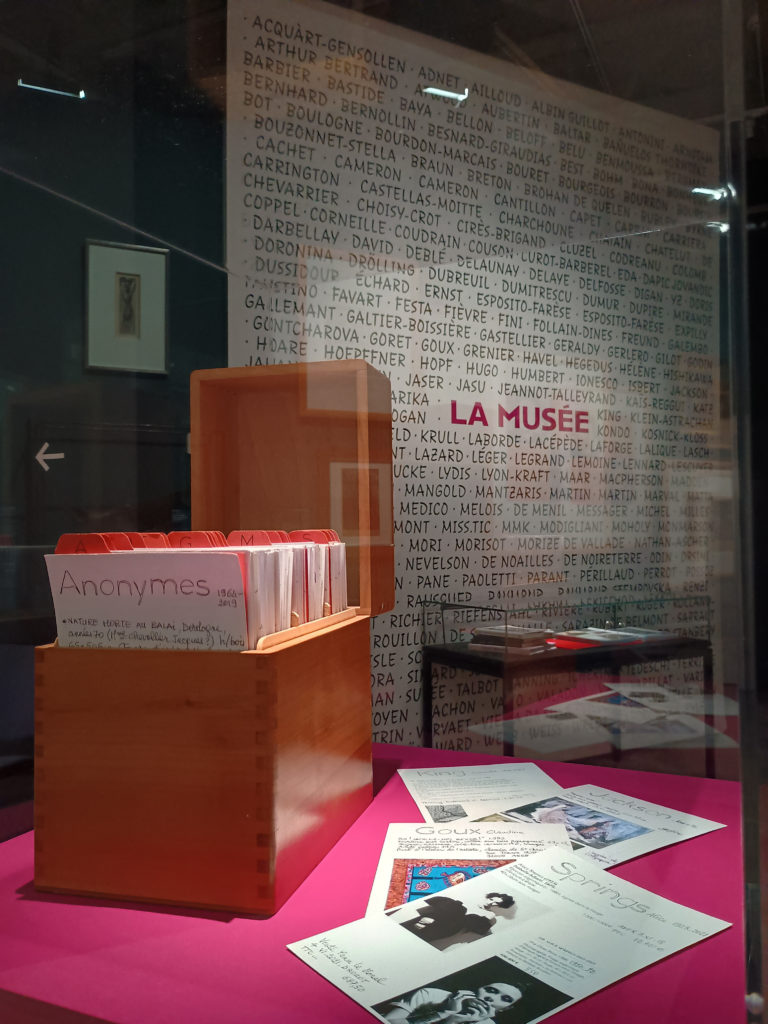
In 2024, the Museums of Poitiers, France, acquired an exceptional collection of 523 works by women artists dating from the 17th to the 21st centuries. The diverse collection – comprising paintings, sculptures, graphic arts, decorative arts, miniatures and more – was built by collector Eugénie Dubreuil beginning in 1999. As an artist, art historian and art teacher, she sees the collection as a ‘counterproposal’ to the dominant discourse in museums, art history courses and the art world, from which women have traditionally been excluded. In the 2010s, realising the scale of her collection, she named it ‘La Musée’ and set out to find a public institution that could house it. After several rejections, she turned to the Sainte-Croix Museum in Poitiers, which she heard had been historically committed to women artists. Thus began the journey of the La Musée collection in Poitiers.
A unique acquisition process for an exceptional collection
On 1 March 2024, after a two-year review, the City of Poitiers made its acquisition of La Musée official. The sheer size and eclectic nature of La Musée required extensive preparations and careful consideration of how it would fit into the city’s collections.
Eugénie Dubreuil’s principled approach makes this collection, which has no known equivalent, a valuable sociological record of the history of feminism at the turn of the 21st century. Assembled by a collector who acquires works based solely on the gender of the artists and who trades pieces with her artist friends, the collection is inherently diverse. Its variety sparked debate among the collegial institutions that oversee the acquisition procedures for French museums. On the advice of the Service des Musées de France [Office of French Museums], the collection was divided into two groups, with 310 works being presented to the regional scientific commission for acquisition as a donation and the rest being added as a deposit to the museums’ collections. For each work deposited, the scientific value of the acquisition must be confirmed by further analysis, particularly with regard to their sometimes uncertain authenticity. In other cases, gaps in information about the artists have to be filled in, as many women artists remain unknown. Since 2024, 34 additional works have been added to the inventory after being reviewed by the regional scientific acquisition committee. While much remains to be done, the research undertaken so far confirms the scientific value of the acquisition, which was accompanied by a donation of the documentation gathered by the collector, as well as an equally exceptional grant of €150,000. This sum, from the Les Beaux Yeux [The Beautiful Eyes] endowment fund chaired by Eugénie Dubreuil, was allocated to the Museums of Poitiers for a five-year project to showcase women artists, the first stage of which consisted of a landmark exhibition.
Shining a spotlight on La Musée with an exhibition-manifesto
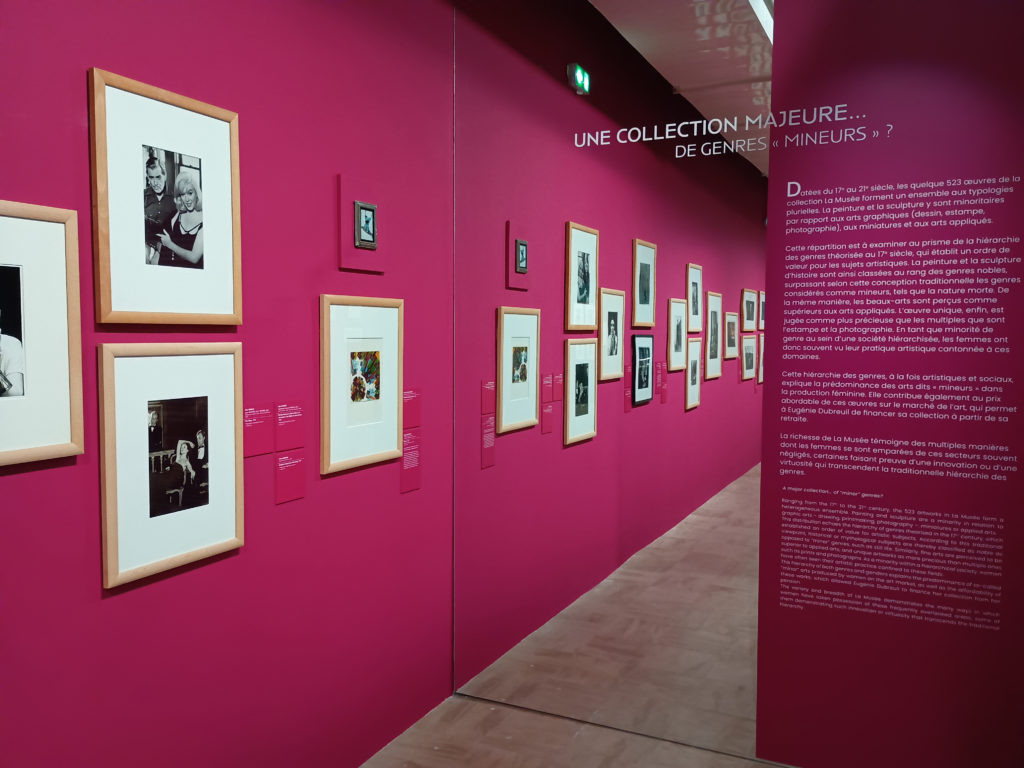
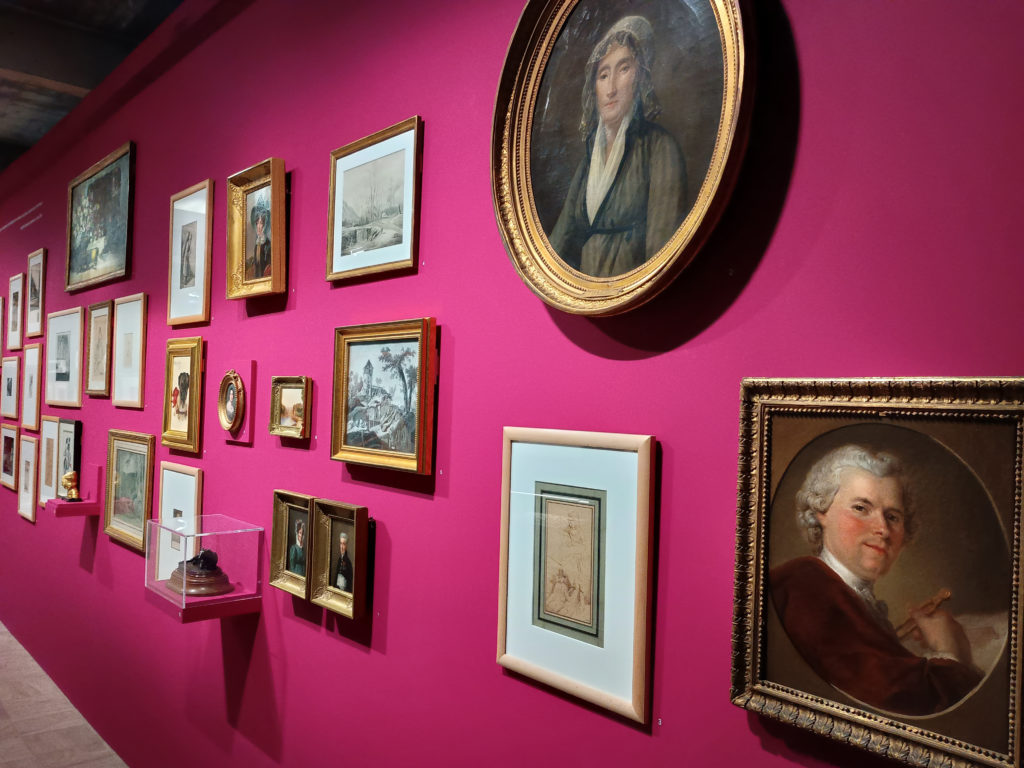
The exhibition La Musée : une collection d’artistes femmes [La Musée: A Collection of Women Artists] was held at the Sainte-Croix Museum in Poitiers from 6 December 2024 to 18 May 2025 and included more than 300 works from the collection. Rather than a chronological succession of individual biographies, the curators opted for a thematic approach that would convey what makes La Musée unique: the transition from a private collection, resulting from one woman’s dedication, to a public collection, with all the challenges that the process of institutionalisation of this matrimoine[1] entails for the museum.
The three parts of the exhibition – dedicated to the collector, the collection and its institutionalisation – focused less on the works and artists than on the sociological phenomena highlighted by the La Musée collection. These include the mechanisms of exclusion in art history – which explain the predominance in the collection of certain art forms wrongly considered ‘minor’ – but also the rebellion that drove Eugénie Dubreuil to principled collecting and the all-too-often unconscious biases of cultural institutions. It is widely admitted in France that works by women are less present in public collections, but also less likely to be acquired, less likely to be presented to the public and therefore less likely to be restored – a lack of attention that jeopardises their transmission to future generations, which is nonetheless one of the missions of France’s national museums. Women artists’ works are also less displayed in permanent museum exhibitions and are still often relegated to temporary events. In a resolutely self-reflective approach, this exhibition-manifesto highlighted the promotion of women artists as a duty of the museum. More broadly, it affirmed the social role of the museum as a public service in the fight against discrimination suffered by all minoritised people.
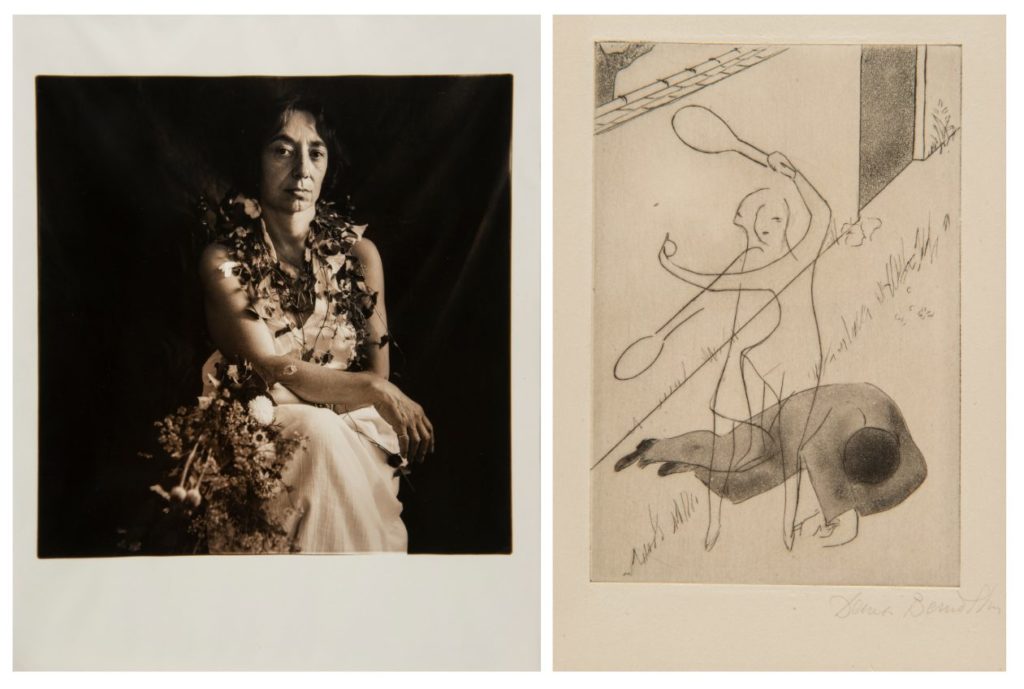
This social manifesto was combined with a scientific manifesto advocating for the fairest way of promoting women artists. For the curators, this meant drawing on gender studies methodologies to avoid heroising the most famous artists in the collection – Rosa Bonheur, Niki de Saint-Phalle and Suzanne Valadon, among others – and instead focusing on contextualisation. Another major challenge in promoting women artists is the event-driven nature that can sometimes limit exhibitions on women artists, whose works are temporarily taken out of storage only to be returned there when the exhibition is over. The desire to break free from that limitation is reflected in particular in the publication of a major collection catalogue[2] and the inclusion of works from La Musée in the permanent exhibition at the Sainte-Croix Museum.
Since the 1980s, the Poitiers curating team has paid particular attention to showing works by women in the permanent exhibition. Fuelled by the La Musée project and the recent acquisition of works by Marie Bracquemond and Madeleine Jouvray, this effort will be reinforced by a programme highlighting the women featured in the collections. The next exhibition at the Sainte-Croix Museum will be dedicated to Sarah Lipska (1882-1973), with Poitiers being home to the first public collection of her works in the world.
As mentioned above, while works by women artists are generally less likely to be acquired, they are also less likely to be exhibited and therefore less likely to be restored. Investing in their conservation is thus essential to pursuing a sustainable policy for promoting women artists. 72 works from La Musée were restored prior to their exhibition. The Museums of Poitiers have since continued this policy with an ambitious campaign to restore works by women, including the large-scale painting Le Retour de la chasse [The Return from the Hunt] by Angèle Delasalle (1898).
Finally, strengthening the link between museums and research is essential in order to integrate the contributions of gender studies into museum policy. That is why the Sainte-Croix Museum is organising a series of La Musée Meetings beginning in April 2026, in partnership with the University of Poitiers and the association Femmes Artistes en Réseaux [Network of Women Artists]. Funded by the above-mentioned grant, these annual meetings aim to promote networking and the sharing of best practices among museum professionals and researchers in order to work collectively to further showcase the work of women artists.
Notes
[1] Editor’s note: In French, the word patrimoine (heritage) is derived from the Latin term pater (‘father’). In response to the erasure of women in the heritage sector, the word matrimoine has been revived for more than a decade to refer to the cultural heritage bequeathed by previous generations of women. The association HF Île-de-France, which advocates for the reinstatement of this formerly used word, states on its website that: ‘The term matrimoine is not a neologism; used since the Middle Ages, it refers to property inherited from the mother, while patrimoine refers to property inherited from the father.Rehabilitating the term matrimoine, which has fallen into disuse, makes it possible to revalue the cultural heritage of women, which the term patrimoine tends to render invisible.’ (see Le Matrimoine website: https://www.lematrimoine.fr/le-matrimoine/)
[2] Camille Belvèze and Manon Lecaplain (eds.), La Musée : une collection d’artistes femmes [La Musée: A Collection of Women Artists], Ghent: Snoeck, 2024.