
Every November, the international community seizes the opportunity of the International Day against Illicit Trafficking in Cultural Property spearheaded by UNESCO and celebrated on the 14th, to underscore the imperative to cooperate in combating this pressing issue from local level to international arena. Through their role in raising awareness, as educators and as custodians of artefacts, museums play a pivotal role in preventing the thefts, looting and illicit exportation of cultural heritage.
Since ICOM’s foundation in 1946, its members have been actively engaged in developing projects and tools that directly counter the illicit trafficking of cultural heritage.
Many of these initiatives have been forged alongside key partners, such as UNESCO, UNIDROIT and INTERPOL. Their combined expertise ensures that the fight against illicit trafficking keeps pace with innovations in technology, policy and legislation.
Key operational projects currently implemented by ICOM include:
ICOM-EU PROJECT PRISM

The second year of implementation of the EU-funded PRISM (Prevention, Research, Investigation and Security in Museums) project is drawing to a close. ICOM’s partners (ICOM Estonia, ICOM Latvia, ICOM Lithuania, ICOM Ukraine, ICOM Hungary, ICOM Slovakia and the National History Museum of Romania) have continued to spearhead numerous activities to bolster the fight against the illicit trafficking of cultural goods at a national level. Through training, research, awareness-raising initiatives and collaboration with national and regional stakeholders, the partners are helping to reinforce prevention and protection measures in museums across Europe.

© ICOM Latvia
At an international level, the ICOM Secretariat has made significant strides in redeveloping the online tool of the ICOM International Observatory on Illicit Traffic in Cultural Goods. Another milestone was reached during the Second Expert Meeting of the Observatory, held in Paris at the ICOM Secretariat on 6-7 July 2026, which convened experts from international organisations, academia, law enforcement agencies and ICOM members. Experts reviewed the platform’s future content, databases and user experience. The meeting also unveiled the Observatory’s new visual identity and logo.

The Observatory is being designed to serve a key dual purpose: as an information repository and as an essential operational and collaborative hub. It will provide practical guidance, thematic resources and up-to-date information to empower all stakeholders to combat the illicit trafficking of cultural goods worldwide. The Observatory is currently in its final development stage and is slated for launch in 2027. Stay tuned…
THE REVISED ICOM CODE OF ETHICS FOR MUSEUMS

The revised ICOM Code of Ethics for Museums approved by the ICOM General Assembly in June 2026 places the fight against the illicit trafficking of cultural property firmly within the ethical remit of museums and all those working in or with them. Grounded in its five overarching principles – Society, Professionalism, Education, Collections and Governance – the Code recognises the protection of cultural heritage as a shared professional and institutional duty. It explicitly calls upon museum professionals to actively prevent illicit trafficking and to refrain from any direct or indirect involvement in the plunder, damage or destruction of cultural heritage, as well as its commercial exploitation. It further emphasises the importance of rigorous provenance research, thorough documentation and accurate inventories as essential mechanisms for identifying illicitly acquired objects and safeguarding collections. Equally, it advocates strengthened cooperation between museums, heritage institutions, law enforcement agencies and national and international organisations, alongside strict compliance with applicable legislation and international conventions.
ICOM RED LISTS
The ICOM Red Lists are worldwide recognised tools in the fight against illicit trafficking. The Red Lists highlight categories of cultural objects that are: vulnerable in their country or region of origin; in high demand on the art market; and are protected by national legislation. The primary objective of this tool is to raise awareness among, and facilitate the work of, police and customs officials, as well as professionals involved in the art and antiquities markets. The message relayed by the Red Lists is clear: should you encounter a cultural object that resembles one of those featured in a Red List, you must conduct thorough due diligence regarding its origin before allowing it to pass through customs or completing a transaction. As such, the Red Lists also underscore the critical importance of provenance research and comprehensive documentation.
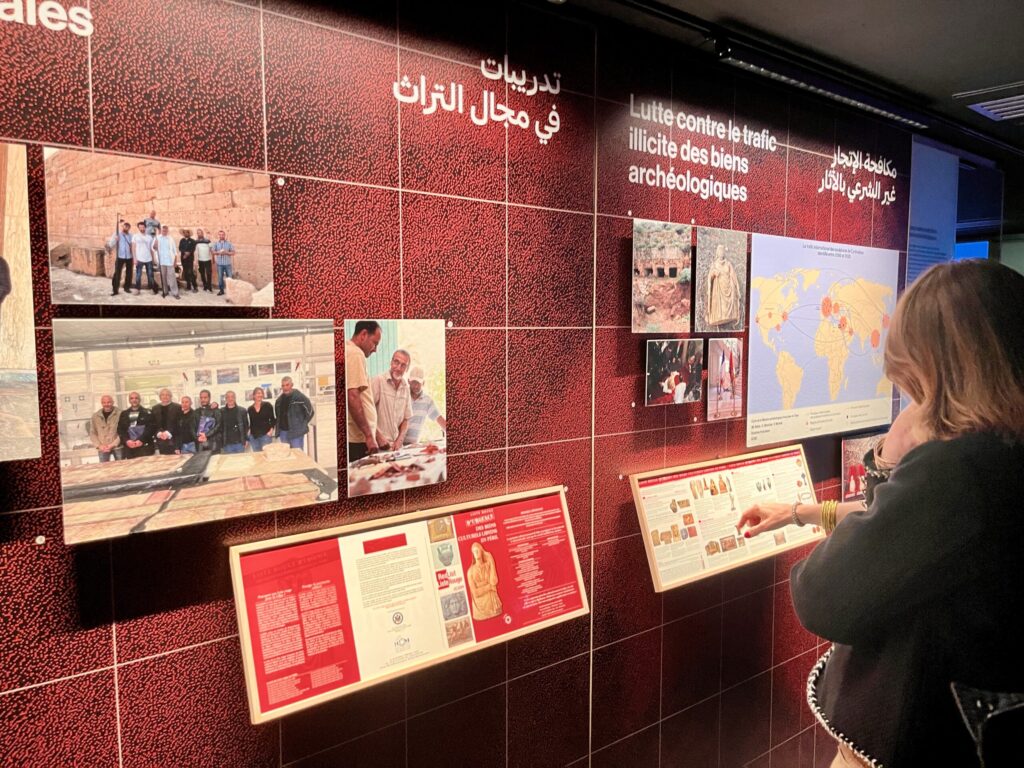
Exhibition ‘Libye, patrimoine révélé’, IMA 2026 © ICOM Secretariat
As of today, ICOM has produced 22 Red Lists. In 2026, several Red Lists are in preparation. These include updates to existing Red Lists, such as those for Afghanistan and Peru, as well as new editions, such as an Emergency Red List for objects at risk in Sudan. These ongoing efforts reflect ICOM’s steadfast commitment to combating illicit trafficking in cultural property and adapting to its evolving dynamics. Further Red List projects are planned for 2027.
MOBILISING THE ENTIRE NETWORK WITH THE SUPPORT OF THE SECRETARIAT
Within the ICOM Secretariat, the efforts to combat illicit trafficking fall under the purview of the Heritage Protection Department. Staff members are frequently invited to take part in professional training sessions, multidisciplinary workshops and academic programmes. This work also supports initiatives and activities spearheaded by ICOM’s network of national and international committees.
Though unfolding within a challenging and complex global context, this collective mobilisation of the network is a highly encouraging sign for the future success of our shared mission.