
Rommel ÁNGELES FALCÓN
President, ICOM Peru
Museums have no borders,
they have a network
August 9, 2025
Rommel ÁNGELES FALCÓN
President, ICOM Peru
To mark the International Day of the World’s Indigenous Peoples, we invited the President of ICOM Peru to share their journey and process in translating the ICOM Museum definition into the Indigenous languages of Peru.
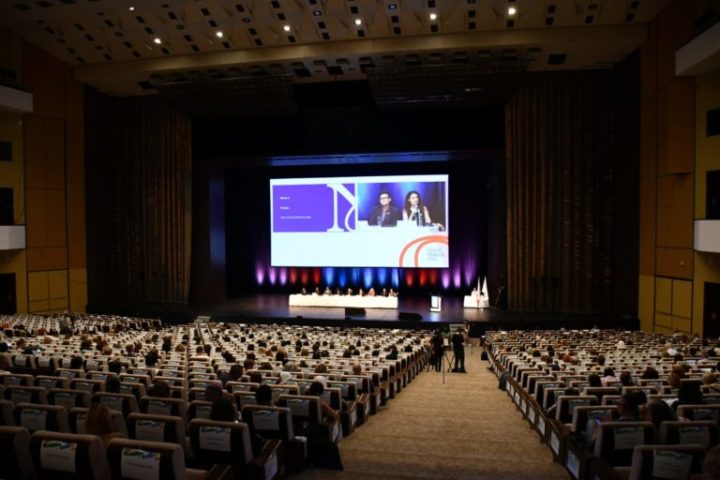
In 2022, the new definition of museums was approved at the Extraordinary General Assembly of ICOM held in Prague. In Latin America and the Caribbean, work has been underway to apply this new definition to museum practice. In Peru, it has been circulated among museums and national institutions.
Although Spanish is the main language of Peru, our diverse and multicultural territory is divided into three main regions (coast, highlands, and Amazon rainforest) where 48 languages are spoken (4 in the Andes and 44 in the Amazon). Among them, Quechua and Aymara are spoken by millions. According to the Official Database of Indigenous or Native Peoples (BDPI) of the Ministry of Culture, there are 9,235 localities in Peru — geographic areas inhabited and/or where the collective rights of indigenous or native peoples are exercised — occupied traditionally, owned, or recognised by the State. These localities are home to 55 indigenous peoples, of which 51 are native to the Amazon and 4 to the Andes (link).
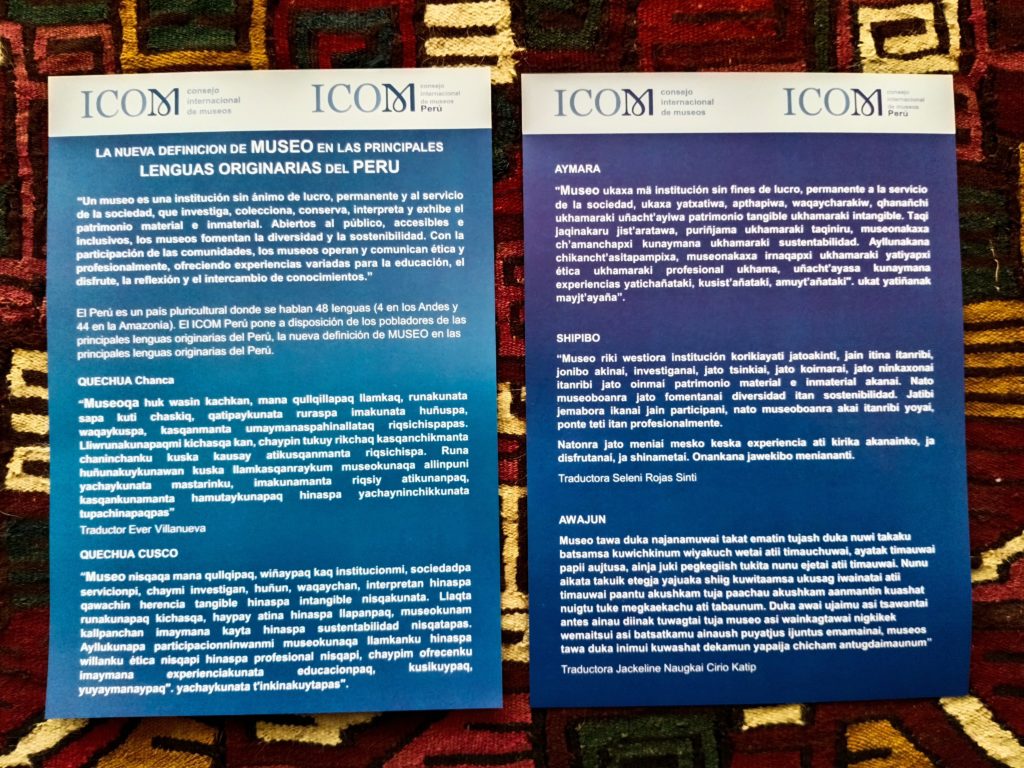
Figure 1: Brochure printed by ICOM Peru The new definition of Museum in the main native languages of Peru. Lima 2025.
Indigenous peoples represent an ethnic and cultural plurality that pre-dates the State, maintaining all or part of their distinctive institutions, and possessing a collective awareness of their indigenous identity. They hold an enormous material and intangible cultural legacy that must be preserved to ensure sustainability and to benefit present and future generations. Museums must play a key role in this effort.
The concept of a museum does not exist in Peru’s native languages. In Andean societies, identity is tied to sacred places linked to their origins: ancestors may be mountains, the sea, a lagoon, or a mythical founder hero. Objects held a sacred connotation. From this perspective, museums might be seen as places where sacred beings, displaced from their place of origin, are kept captive. This perception resonates when visiting museums such as the Quai Branly in Paris, where sculptures from Africa, Oceania, Asia, or the Americas seem to possess life and latent energy.
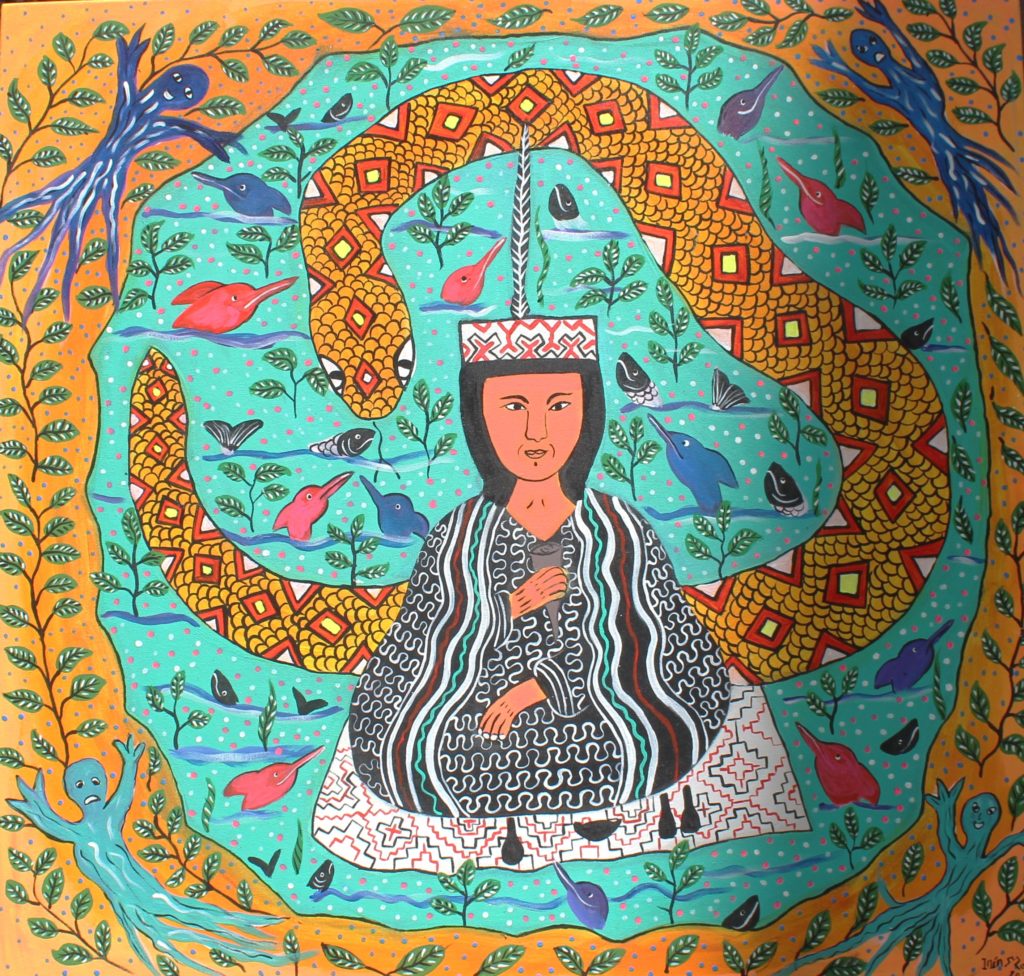
Figure 2: Detail of modern Amazonian painting narrating a myth of the region. Ruraq Maki Fair 2023. Photo Rommel Angeles
With this in mind, ICOM Peru decided to explore disseminating the new definition of museums to our indigenous communities. The first challenge was to find official translators or individuals fluent in their languages who could also grasp concepts such as museum, tangible and intangible heritage, accessibility, inclusion, diversity, sustainability, ethics, enjoyment, and knowledge exchange — terms not always present in those languages. We worked with an official Quechua translator, an Aymara translator, and speakers of various Amazonian languages, obtaining translations and citing those responsible for them.
This information was presented to Emma Nardi, President of ICOM International, at the ICOM General Assembly in Marseille in 2024, where the initiative was praised.
In 2025, we published a leaflet containing the new definition of a museum in the main indigenous languages of Peru. It began to be distributed in May at the National Museum of Peruvian Culture during International Museum Day. This was significant because this museum engages with many indigenous communities who exhibit their cultural objects there.
We believe that dissemination must target both the museum community and the indigenous populations involved. For this reason, we took advantage of the Ruraq Maki (“Handmade”) craft fair organised by the Ministry of Culture, held in Lima in July (Independence Day) and December (Christmas). The event gathers over 100 artisans from Quechua, Aymara, and Amazonian communities across the country, many travelling from remote areas with their art, language, identity, and hopes.
In 2025, we attended this fair, distributed the leaflet, and spoke with artisans and residents who spoke Quechua, Aymara, Awajún, and even Yanesha — an Amazonian language not included in the initial translation.
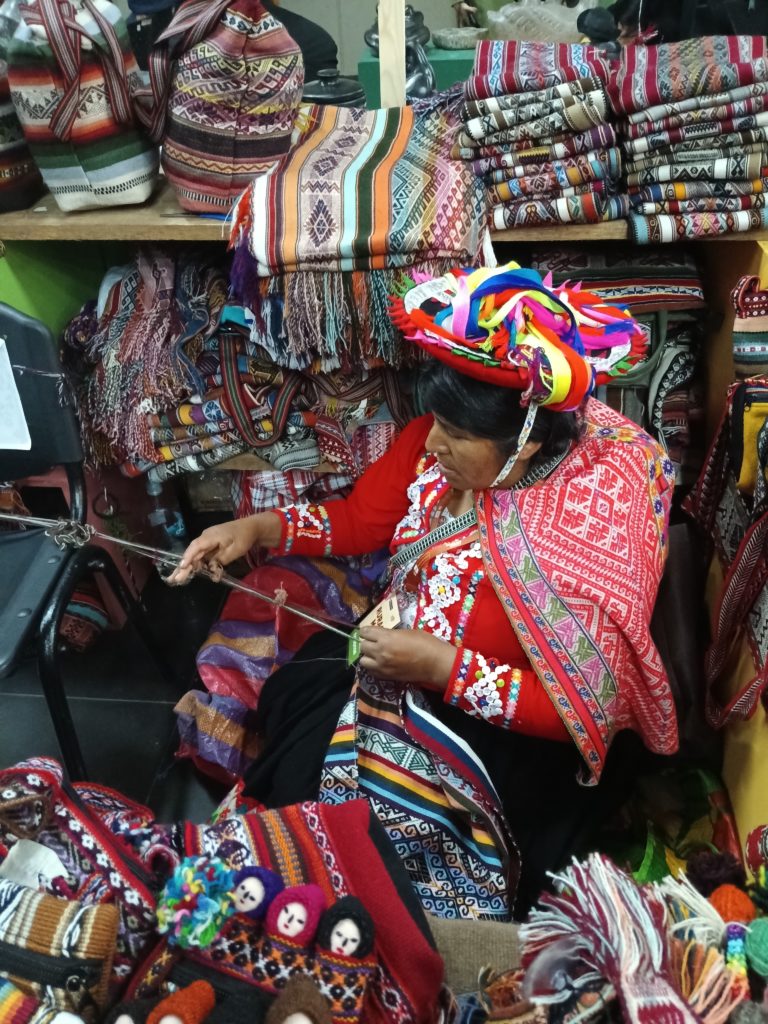
Figure 3: Textile artisan from the Cusco region, native language: Quechua. Ruraq Maki 2025 Fair. Photo Rommel Angeles
We found that the word “museum” does not exist in these languages, yet it can be expressed in different ways. In Ayacucho Quechua, for instance, it may be translated as yachachina wasi (“place where things are displayed”).
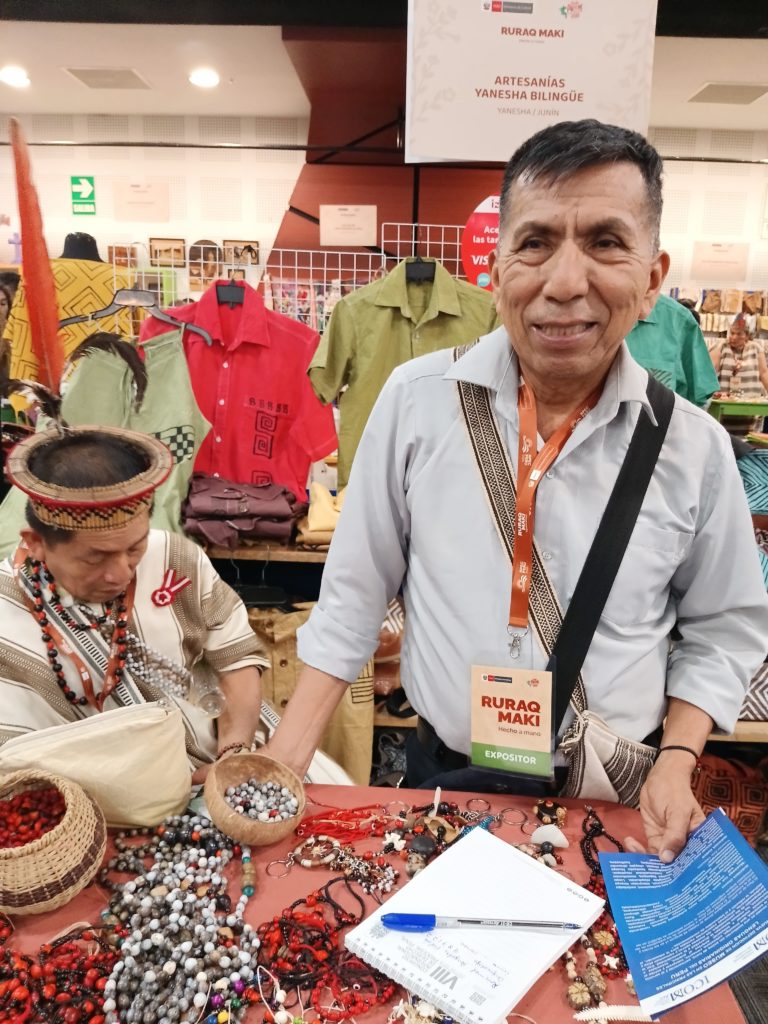
A notable moment came when speaking with Yanesha resident Eliseo Miguel López, who said his people have existed for 3,500 years and live in the central Amazon. He praised the new definition as excellent, emphasising the museum’s role in preservation, revalorisation, and display. In Yanesha, museum translates to “place of exhibition”. For a community facing extinction due to the disintegration of its cultural identity, territory, philosophy, and thought, a precolonial Yanesha museum would be vital in safeguarding and presenting ancestral knowledge and traditional culture before it disappears.
In June, we were invited to the III Cusco Forum for the Protection of Cultural Heritage against Trafficking in Cultural Property, organised by the Ministry of Foreign Affairs, UNESCO Lima, and the Ministry of Culture. The event brought together ministers and cultural representatives from Latin America, the Caribbean, the United States, Spain, and Italy. We presented the leaflet to the Ministers of Culture of Guatemala, Colombia, Mexico, and Bolivia, among others. In countries like Guatemala and Mexico, which have several indigenous languages, the Peruvian experience of translating the definition into native tongues was considered worth replicating.
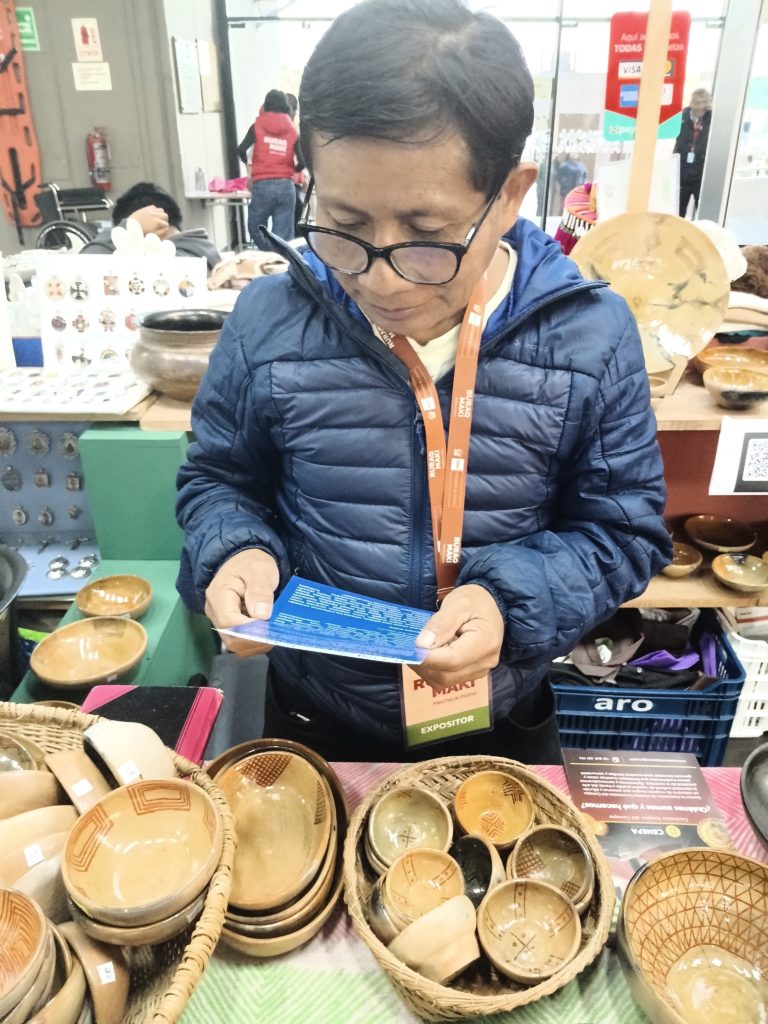 Figure 4: Villager from the Amazonian Awajun community reading the brochure with the new ICOM museum definition. Ruraq Maki 2025 Fair. Photo Rommel Angeles
We believe this is just the beginning, opening many possibilities to democratise knowledge, spread awareness of what a museum is, and reach millions of citizens with equal rights to preserve and share their knowledge and cultural heritage in a world in constant change, where many factors threaten our cultural memory. We are convinced that the new museum definition is valuable for museums, their audiences, and indigenous communities alike.
QUECHUA Chanca
“Museoqa huk wasin kachkan, mana qullqillapaq llamkaq, runakunata sapa kuti chaskiq, qatipaykunata ruraspa imakunata huñuspa, waqaykuspa, kasqanmanta umaymanaspahinallataq riqsichispapas. Lliwrunakunapaqmi kichasqa kan, chaypin tukuy rikchaq kasqanchikmanta chaninchanku kuska kausay atikusqanmanta riqsichispa. Runa huñunakuykunawan kuska llamkasqanraykum museokunaqa allinpuni yachaykunata mastarinku, imakunamanta riqsiy atikunanpaq, kasqankunamanta hamutaykunapaq hinaspa yachayninchikkunata tupachinapaqpas”
Translator: Ever Villanueva
QUECHUA Cusco
“Museo nisqaqa mana qullqipaq, wiñaypaq kaq institucionmi, sociedadpa servicionpi, chaymi investigan, huñun, waqaychan, interpretan hinaspa qawachin herencia tangible hinaspa intangible nisqakunata. Llaqta runakunapaq kichasqa, haypay atina hinaspa llapanpaq, museokunam kallpanchan imaymana kayta hinaspa sustentabilidad nisqatapas. Ayllukunapa participacionninwanmi museokunaqa llamkanku hinaspa willanku ética nisqapi hinaspa profesional nisqapi, chaypim ofrecenku imaymana experienciakunata educacionpaq, kusikuypaq, yuyaymanaypaq”. yachaykunata t’inkinakuytapas”
AIMARA
“Museo ukaxa mä institución sin fines de lucro, permanente a la servicio de la sociedad, ukaxa yatxatiwa, apthapiwa, waqaycharakiw, qhanañchi ukhamaraki uñacht’ayiwa patrimonio tangible ukhamaraki intangible. Taqi jaqinakaru jist’aratawa, puriñjama ukhamaraki taqiniru, museonakaxa ch’amanchapxi kunaymana ukhamaraki sustentabilidad. Ayllunakana chikancht’asitapampixa, museonakaxa irnaqapxi ukhamaraki yatiyapxi ética ukhamaraki profesional ukhama, uñacht’ayasa kunaymana experiencias yatichañataki, kusist’añataki, amuyt’añataki”. ukat yatiñanak mayjt’ayaña”
SHIPIBO
“Museo riki westiora institución korikiayati jatoakinti, jain itina itanribí, jonibo akinaí, investiganai, jato tsinkiai, jato koirnaraí, jato ninkaxonaí itanribi jato oinmaí patrimonio material e inmaterial akanaí. Nato museoboanra jato fomentanaí diversidad itan sostenibilidad. Jatibi jemabora ikanai jain participani, nato museoboanra akai itanribí yoyaí, ponte teti itan profesionalmente.
Natonra jato meniaí mesko keska experiencia ati kirika akanainko, ja disfrutanaí, ja shinametaí. Onankana jawekibo menianantí.”
Translator Seleni Rojas Sinti
AWAJUN
“Museo tawa duka najanamuwai takat ematín tujash duka nuwi takaku batsamsa kuwichkinum wiyakuch wetaí atii timauchuwai, ayatak timauwai papii aujtusa, ainja juki pegkegiish tukita nunu ejetai atii timauwai. Nunu aikata takuik etegja yajuaka shiig kuwitaamsa ukusag iwainatai atii timauwai paantu akushkam tuja paachau akushkam aanmantin kuashat nuigtu tuke megkaekachu atí tabaunum. Duka awai ujaimu así tsawantai antes ainau diinak tuwagtai tuja museo así wainkagtawai nigkikek wemaitsui así batsatkamu ainaush puyatjus ijuntus emamainai, museos tawa duka inimui kuwashat dekamun yapaija chicham antugdaimaunum”
Translator Jackeline Naugkai Cirio Katip
We would like to thank ICOM International, especially Emma Nardi, Jaime Valentín Coquis and Amalia Castelli of ICOM Peru, Estela Miranda, director of the Museo de la Cultura Peruana and Blanca Alva Guerrero, general director of Museums of the Ministry of Culture.