IMD Past editions
2023 – Museums, Sustainability and Wellbeing

Museums are key contributors to the wellbeing and to the sustainable development of our communities. As trusted institutions and important threads in our shared social fabric, they are uniquely placed to create a cascading effect to foster positive change. There are many ways in which museums can contribute to achieve the Sustainable Development Goals: from supporting climate action and fostering inclusivity, to tackling social isolation and improving mental health.
As highlighted in the ICOM Resolution “On sustainability and the implementation of Agenda 2030, Transforming our World” (Kyoto, 2019), all museums have a role to play in shaping and creating sustainable futures, and they can do this through educational programmes, exhibitions, community outreach and research.
2022 – The Power of Museums

Museums have the power to transform the world around us. As incomparable places of discovery, they teach us about our past and open our minds to new ideas — two essential steps in building a better future.
On International Museum Day 2022, which will take place on May 18th, we want to explore the potential of museums to bring about positive change in their communities through three lenses:
- The power of achieving sustainability: Museums are strategic partners in the implementation of the Sustainable Development Goals of the United Nations. As key actors in their local communities, they contribute to a wide variety of Goals, which include fostering short-circuit and social economy and disseminating scientific information on environmental challenges.
- The power of innovating on digitalisation and accessibility: Museums have become innovative playing-grounds where new technologies can be developed and applied to everyday life. Digital innovation can make museums more accessible and engaging, helping audiences understand complex and nuanced concepts.
- The power of community building through education: Through its collections and programmes, museums thread a social fabric that is essential in community building. By upholding democratic values and providing life-long learning opportunities to all, they contribute to shaping an informed and engaged civil society.
In this edition of International Museum Day, we invited you to join thousands of museums around the world in unleashing the power of museums!
2021 – The Future of Museums – Recover and Reimagine
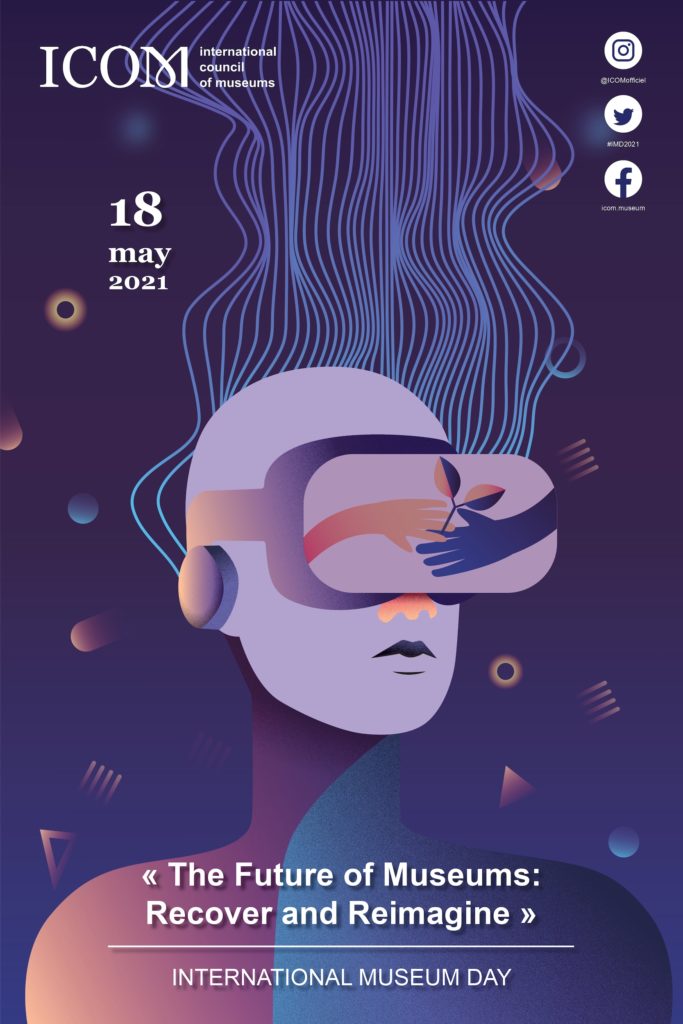
With the theme “The Future of Museums: Recover and Reimagine”, International Museum Day 2021 invites museums, their professionals and communities to create, imagine and share new practices of (co-)creation of value, new business models for cultural institutions and innovative solutions for the social, economic and environmental challenges of the present.
The year 2020 has been like no other. The COVID-19 crisis has swept the whole world abruptly, affecting every aspect of our lives Some already pressing issues have been exacerbated, questioning the very structure of our societies: the call for equality is stronger than ever.
Museums are no exception to these changes, and the cultural sector is among the most affected, with serious economic, social and psychological repercussions in the short and long term alike. But this crisis also served as a catalyst for crucial innovations that were already underway, notably an increased focus on digitisation and the creation of new forms of cultural experience and dissemination.
This is a pivotal moment for our society, and we call museums to embrace it and lead the change. The time is now to rethink our relationship with the communities we serve, to experiment with new and hybrid models of cultural fruition and to strongly reaffirm the essential value of museums for the construction of a just and sustainable future.
We must advocate for the creative potential of culture as a driver for recovery and innovation in the post-COVID era!
2020 – Museums for Equality: Diversity and Inclusion
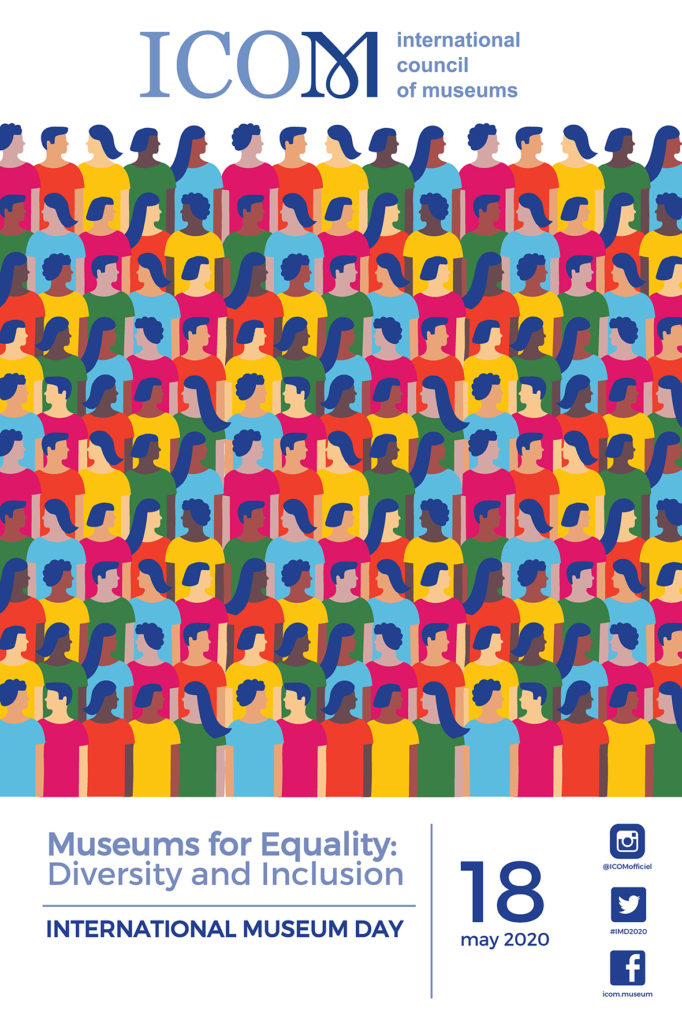
With the theme Museums for Equality: Diversity and Inclusion, International Museum Day 2020 aimed at becoming a rallying point to both celebrate the diversity of perspectives that make up the communities and personnel of museums, and champion tools for identifying and overcoming bias in what they display and the stories they tell.
The potential of museums to create meaningful experiences for peoples of all origins and backgrounds is central to their social value. As agents of change and trusted institutions, there is no time like the present for museums to demonstrate their relevance by engaging constructively in the political, social, and cultural realities of modern society.
The challenges of inclusion and diversity and the difficulty of navigating complex social issues in increasingly polarised environments, while not unique to museums and cultural institutions, are important ones, due the high regard in which museums are held by society.
An increasing public expectation for social change has catalysed a conversation around museums’ potential for social good in the form of exhibitions, conferences, performances, education programmes, and initiatives created. However, there remains much to do to overcome conscious and subconscious power dynamics that can create disparities within museums, and between museums and their visitors.
These disparities can relate to many topics, including ethnicity, gender, sexual orientation and identity, socioeconomic background, education level, physical ability, political affiliation and religious beliefs.
Following the COVID-19 outbreak and the subsequent lockdowns, we decided to adapt the format and focus on digital activities, to promote the values of IMD while ensuring the safety of the public and staff alike. Despite the limitations imposed by a digital-only format, #IMD2020 activites reached more than 83 000 000 users on social media, on May 18 alone!
2019 – Museums as Cultural Hubs: the Future of Tradition
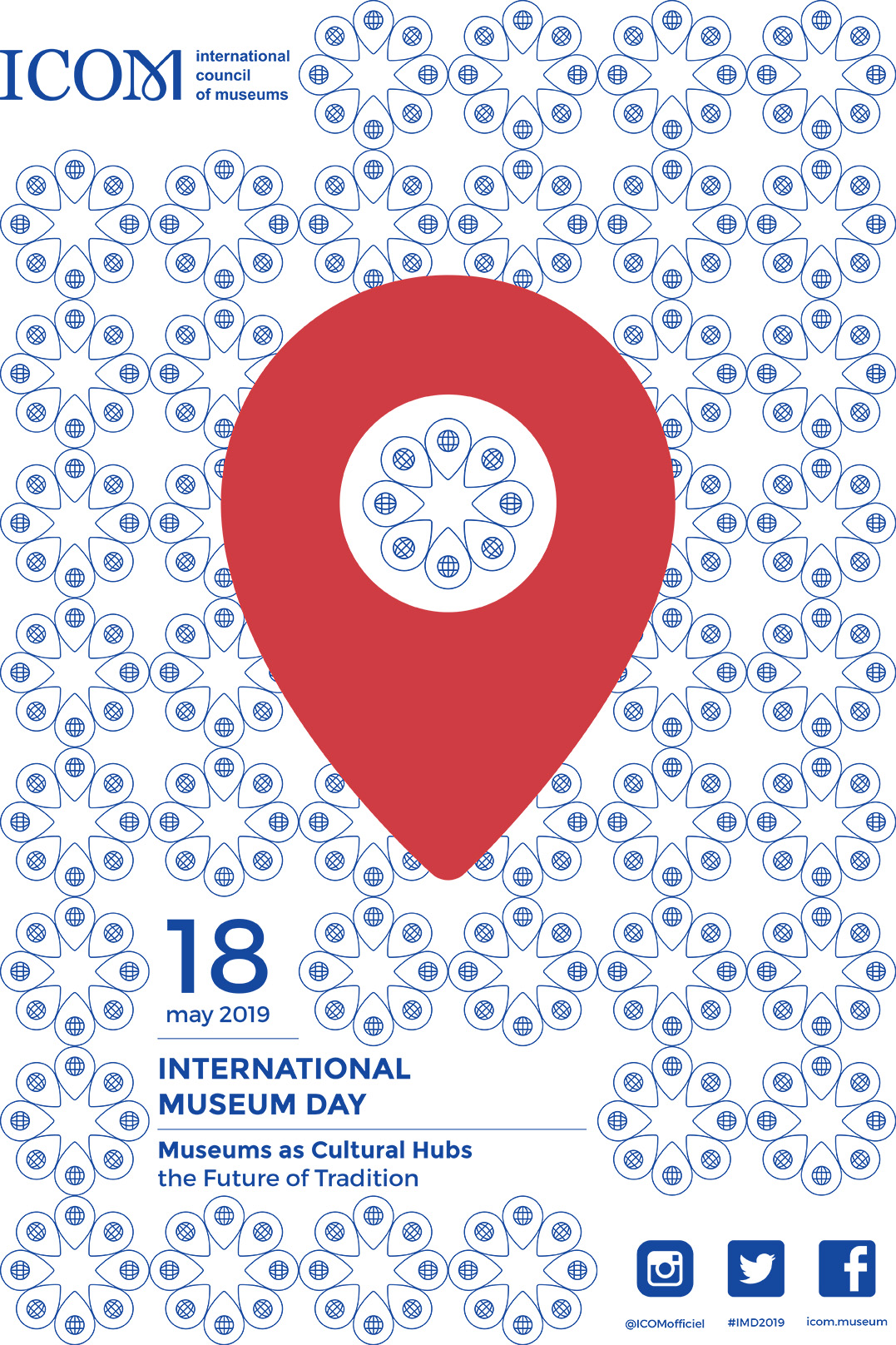
During the International Museum Day 2019, ICOM celebrated the theme: “Museums as Cultural Hubs: the Future of Tradition”.
The role of museums in society is changing. Museums keep reinventing themselves in their quest for becoming more interactive, audience focused, community oriented, flexible, adaptable and mobile. They have become cultural hubs functioning as platforms where creativity combines with knowledge and where visitors can also co-create, share and interact.
While preserving their primary missions – collecting, conservation, communication, research, exhibition – museums have transformed their practices to remain closer to the communities they serve. Today they look for innovative ways to tackle contemporary social issues and conflict. By acting locally, museums can also advocate and mitigate global problems, striving to meet the challenges of today’s society proactively. As institutions at the heart of society, museums have the power to establish dialogue between cultures, to build bridges for a peaceful world and to define a sustainable future.
As museums increasingly grow into their roles as cultural hubs, they are also finding new ways to honour their collections, their histories and their legacies, creating traditions that will have new meaning for future generations and relevance for an increasingly diverse contemporary audience at a global level. This transformation, which will have a profound impact on museum theory and practice, also forces us to rethink the value of museums and to question the ethical boundaries that define the very nature of our work as museum professionals.
At once a focal point for the community and an integral part of a global network, museums offer a platform for translating local communities’ needs and views into a global context.
2018 – Hyperconnected museums: New approaches, new publics

“Hyperconnectivity” is a term invented in 2001 to design the multiple means of communication we have today, such as face-to-face contact, email, instant messaging, telephone or the Internet. This global network of connections becomes each day more complex, diverse and integrated. In the hyperconnected world of today, museums join the trend. This is the reason why the International Council of Museums (ICOM) chose the theme “Hyperconnected museums: New approaches, new publics” for the International Museum Day 2018.
It is impossible to understand the role of museums without taking into account all the connections they make. They are an inherent part of their local communities, their cultural landscape and their natural environment. Thanks to technology, museums can now reach way beyond their core audience and find new publics when approaching their collections in a different way: it can be the digitalisation of their collections, adding multimedia elements to the exhibition or something as simple as a hashtag that allows visitors to share their experience in social media.
However, not all these new connections are due to technology. As museums strive to maintain their relevance in society, they shift their attention to the local community and the diverse groups that make it up. As a result, these past years we have witnessed the birth of countless common projects organised by museums with the collaboration of minorities, indigenous peoples and local institutions. To engage these new publics and strengthen their connections with them, museums must find new ways of interpreting and presenting their collections.
2017 – Museums and contested histories: saying the unspeakable in museums
The worldwide community of museums celebrated International Museum Day 2017 around the theme “Museums and contested histories: saying the unspeakable in museums”. This theme focuses on the role of museums that, by working to benefit society, become hubs for promoting peaceful relationships between people. The acceptance of a contested history is the first step in envisioning a shared future under the banner of reconciliation. Saying the unspeakable in museums looks at how to understand the incomprehensible aspects of the contested histories inherent to the human race. It also encourages museums to play an active role in peacefully addressing traumatic histories through mediation and multiple points of view.
Back to the origins of International Museum Day
International Museum Day is coming up on May 18 but, before that, let’s go back to 1978. We invite you to discover the story behind the creation of this milestone to rally the international museum community by diving into our recently digitised archives.
1976: THE BIRTH OF AN IDEA
As early as 1949, André Leveillé, president from 1948 to 1956 of Icom’s Committee No. 1 for scientific and technical museums, planetaria, health museums, and museums of the history of science and technology (the future CIMUSET), called for a “museum crusade” at the end of his introduction to the issue of Museum, Vol II, No. 4, 1949, entitled “Museums in the service of all / Les Musées au service de tous.
« Museum directors may look to the future with confidence, but they must also realize where their duties and responsibilities lie. They must work with faith and enthusiasm, joining in the croisade for museums that we are appealing to Unesco to launch with all the power and resources at its command.»
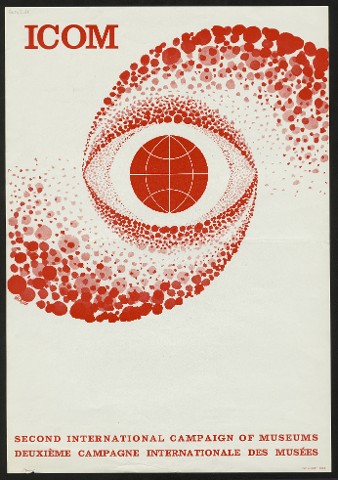
From 1956 onwards, ICOM launched two “International museum campaigns” with UNESCO (7-14 October 1956, and 1967-1968), focusing on the educational role of museums. But it wasn’t until the 138th meeting of the Executive Board on 24-25 June 1976 that the idea of creating an annual world day dedicated to the cause of museums was born. The minutes of this meeting state:
“After examining some concrete proposals made by various National Committees, the Executive Council decides :
[…]
– To ask the Soviet National Committee to formulate a proposal for the establishment of an International Museum Day.”
1977: 12TH ICOM GENERAL CONFERENCE, MOSCOW
The 1977 Moscow General Conference brought together professionals from all over the world on the theme of “Museums and cultural exchanges”. The proceedings of this conference are available online.
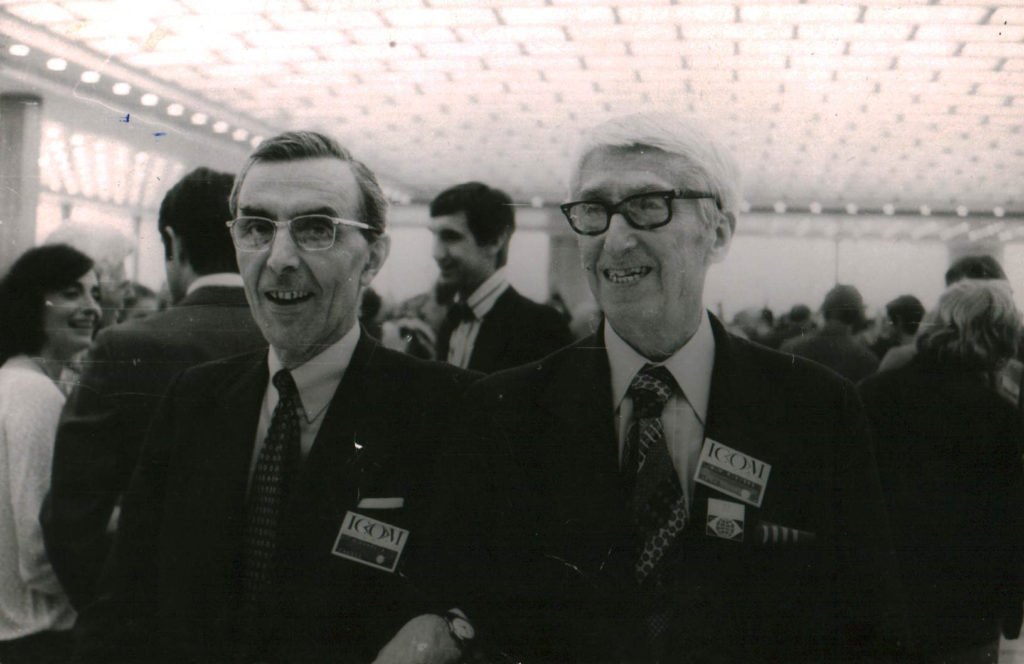
Hubert Landais and Georges Henri Rivière at ICOM Moscow 1977
It was at this General Conference that an annual International Museum Day was established on 18 May, starting in 1978 with the adoption of Resolution No. 5: International Museum Day
Noting the ever-increasing role of museums in many countries, within scientific, cultural and technical organisations, which corresponds to the profound processes of development of aspirations for progress and the actions of those throughout the world who wish to strengthen relations and mutual understanding between peoples
Considers it rational, in order to harmonise the creative aspirations and efforts of museums and to draw the attention of world opinion to their activity, to take the decision to hold an annual International Museum Day. This event will be held under the motto: “Museums as an important means of cultural exchange, enrichment of cultures, development of mutual understanding, co-operation and peace among peoples”,
Recommends that the International Day of Museums be organised from 1978 onwards, and that it be held every year on 18 May. Various events will mark this day: inauguration of new museums and exhibitions, meetings with visitors in order to make the aims, functions and activities of ICOM and its National Committees known to the public, publication of articles on this theme in periodicals, exchange of exhibitions, international forums to discuss the major problems of museum theory and practice
Expresses its confidence that the annual Museums Day will develop the role of museums that use the universal language of the original object to enhance international understanding.
1978: FIRST EDITION OF THE INTERNATIONAL MUSEUM DAY
The first edition of International Museum Day was a success, and museums of all continents took part in it. For example, in Australia, museums such as the South Australian Museum in Adelaide opened their storerooms and workshops to visitors for the first time, giving them a never-before-seen glimpse of the behind the scenes. Other museums in Canada and Spain offered visual and sound performances, and most museums in Iran opened their doors to the public free of charge. In New Zealand, the Tauranga District Museum held a costume party for staff and volunteers. Many conferences were also specially organised around the role of museums and ICOM in the global museum community.
For more information: ICOM News, Vol. 31, No. 1-4, p. 12-15: Article on the 1st International Museum Day on 18 May 1978
https://gallica.bnf.fr/ark:/12148/bpt6k6585110w/f14.item
FIND MORE INFORMATION ON THE ONLINE LIBRARY
If you are an ICOM member, you can now find on the Archives portal 21 documents (programmes, letters, reports, stickers, commemorative cancellations) from Spain, Switzerland, Portugal, the United States, the United Kingdom, Iran, Romania and Russia about this day. To find them: Member’s area: Tools for committees / online catalogue / Archives / keyword = International Museum Day + year of edition = 1978.
Discover also the original digitized posters of this 1978 edition in Portugal, Catalonia and Romania downloadable in high definition on the ICOM Images portal.
To find them : Member’s Area : Tools for committees / online catalogue / Images / Advanced search : keyword = international museums day + year of edition = 1978